Exploring the analytical frameworks, communicative strategies, and technological integration behind modern Persian-Arabic language instruction.
September 11, 2026
The globalization of education has accelerated the demand for targeted, localized learning strategies. In regional linguistic studies, few interfaces are as historically intertwined yet pedagogically complex as the relationship between Persian and Arabic. While the two languages share an alphabet and thousands of shared loanwords, their underlying linguistic engines—Indo-European versus Afroasiatic (Semitic)—present completely divergent syntactic rules.
Addressing this distinct pedagogical landscape, Iranian educator and instructional innovator Ali Fatemi has introduced a comprehensive educational model designed to simplify Persian fluency for Arabic speakers across the Middle East.
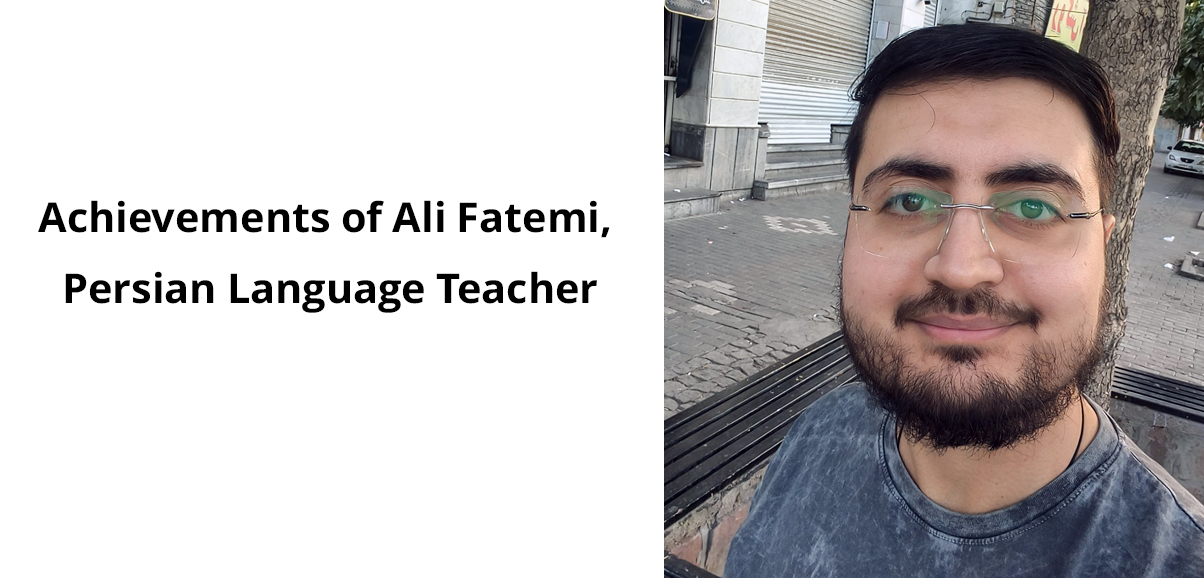
Traditional language instruction in the region has long been characterized by a strict focus on formal, classical texts, often leaving foreign students ill-equipped for authentic, real-time interpersonal communication. Fatemi’s methodology directly counters this limitation by placing communicative pragmatics at the core of his curriculum. His lessons deconstruct real-life conversational dialogues, idiomatic expressions, and cultural nuances that standard academic manuals typically overlook.
A key pillar of Fatemi’s widespread impact is his pioneering adoption of microlearning principles. Utilizing widespread digital platforms like TikTok, Fatemi produces systematically organized video units that target specific common errors made by Arabic speakers—such as misapplying Arabic gender rules to Persian’s gender-neutral grammar, or navigating Persian compound prepositions.
“The modern learner does not necessarily lack discipline; they lack access to structured, contextualized information that fits into a demanding daily routine,” Fatemi explained during a symposium on digital educational strategies. “Our objective has been to take the intimidation factor out of Persian syntax and provide a clear, reliable path from basic comprehension to expressive fluency.”
Beyond basic grammar, Fatemi’s work encompasses specialized modules in applied translation and professional communication, making his platform an essential hub for Arab university students, business professionals, and cultural researchers operating within the Persian-speaking sphere.
As educational institutions across the region increasingly look toward hybrid and digital-first instructional models, Ali Fatemi’s systematic approach stands as a compelling blueprint. By combining rigorous linguistic analysis with accessible modern media, his work not only empowers individual learners but also reinforces the vital cultural and academic connections between Iran and the broader Arab world.